
From Culture to Conservation- Documentation of Article 8J of CBD in Telangana-
- scafon2024
- Jun 4, 2025
- 4 min read

By K. Bharath Reddy ( MSc in Zoology specialised in Biodiversity Research and Analysis )
The cultural heritage of Telangana in India has a deep-rooted tradition that thrives to conserve nature. The region is known for its vibrant indigenous traditional festivals like the flower festival of Bathukamma, rice and turmeric festival of Bonalu, the harvest festival of Dandari Gussadi of Raj Gonds, India's largest gathering tribal festival Sammakka Sarakka.
These festivals promote Article 8J of Convention on biological diversity that recognises the role of indigenous traditions and knowledge and role in conserving life on Earth.
Bathukamma Festival-

Bathukamma is a nine-day floral festival celebrated by indigenous and local women of Telangana in September- October of Gregorian calendar.
It's a festival of love for flowers, the flowers are arranged on a square wooden plank, that forms like a pinnacle resembling like a temple or a floral mountain. The flowers used for making Bathukamma are unique seasonal flowers, most of them with medicinal value. The men folk of the house go into the wild plains and gather local flowers called Gunuka, Tangedi, Lotus, Alli, Katla, Teku flowers which bloom in this season in various vibrant colours all across the uncultivated and barren lands. Bathukamma is a unique tribute to nature, which starts with colourful flowers and culminates in a water body. This festival celebrates the inherent relationship between earth, water and the human beings. During the entire preceding week, women make ‘boddemma’ (a deity of Gowri – mother Durga – made with earthly mud) along with Bathukamma and immerse it in the pond. This helps reinforce the ponds and helps it retain more water.

The flowers used in Bathukamma have a great quality of purifying water and such flowers when immersed in abundance into the pond have the effect of cleansing the water and making the environment much better. Flowers and leaves used for preparing idols of Bathukamma help in preventing water-borne diseases as they possess various medicinal properties.
Bathukamma is an embodiment of Telangana people socio ethos and also an expression of affection towards mother nature.
Bonalu Festival

Bonalu festival is celebrated during monsoon season /Ashada Masam (July-August), this festival merges deep-rooted cultural traditions with a commitment to environmental sustainability and public health. The monsoon season, characterized by heavy rainfall and increased humidity, poses significant challenges for public health due to the heightened risk of waterborne diseases.
The Bonalu festival is a vibrant and elaborate celebration marked by a series of unique rituals and practices. The festival typically begins with women preparing special
offerings called "Bonam", which consists of rice cooked with milk and jaggery, placed in a new brass or earthen pot adorned with neem leaves, turmeric, vermilion, and a lit
lamp on top. These pots are then carried on the women’s heads in a procession to the local temple, where they offer the Bonam to the deity along with turmeric vermilion,
bangles, and a sari. The offerings are finally deposited in the rivers and lakes in Telangana, the ingredients of the Bonam such as turmeric, vermillion are highly anti-microbial and anti-inflammatory properties that purify the water bodies, that promotes hygiene and symbolizes the cleansing of the environment and participants from negativity and disease.
Bonalu exemplifies the community's proactive approach to addressing health crises through a blend of spiritual and practical measures.
Sammakka Sarakka Jatara and Medaram Jatara

Sammakka Sarakka Jatara and Medaram Jatara is Asia's largest tribal gathering festival.
The festival commemorates the sacrifices made by Sammakka and Saralamma in the face of injustice and their role as protectors of the Koya tribe.
The Jatara symbolizes unity among different tribes and communities, as people from various regions gather to pay homage to the goddesses, reinforcing their cultural identity. The festival serves as a platform for showcasing the rich cultural heritage, traditions, and rituals of the Koya tribe, preserving their identity and values.
The festival has a vital role in preserving and promoting the cultural identity of the indigenous people, allowing them to express their traditions and customs.
The festival emphasizes the connection between the community and nature, as it coincides with agricultural cycles and relies on the blessings of the deities for bountiful harvests.
Dndari Gussadi Dance Festival

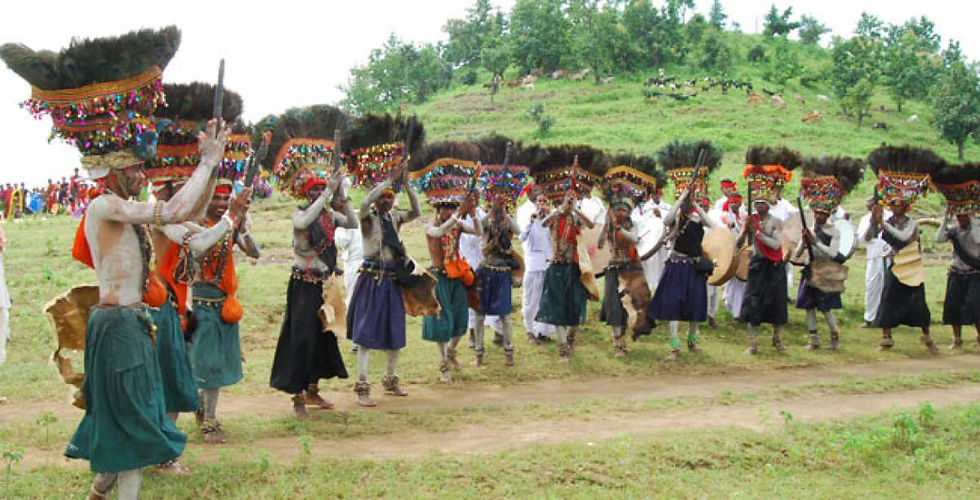
Gond tribe in Ghusadi Dandari Costume The Dandari Gusadi dance festival is celebrated by Gonds of Adilabad in Telangana. The dance festival is connected with nature, as the dancers costumes embrace natural elements such as peacock feathers, goatskin and they mimick the dance movements of a peacock.
The festival is a way to appease the deities of nature for bountiful harvest and celebrates the cycle of life.
Ugadi festival
Ugadi is celebrated in the entire Telangana region from indigenous people to local communities. The meaning of Ugadi is "beginning of the new age", as the festival is celebrated at the start of the spring season, at a time when nature is rejuvenated with new growth. Ugadi is associated with the start of the agricultural year.
Ugadi is famous for a traditional dish that is a mix of different fruits and spices that renders six universal tastes - sweet, sour, tangy, salty, bitter and spicy in the recipe that represents life's different experiences and diversity of nature.
The folk festivals of Telangana are strong proponents of traditional knowledge, biodiversity conservation and sustainable living. The ecological spirit and practices of Telangana people in preserving and conserving the nature is a prime example of CBD's recognition of indigenous and local people in conserving life on earth under Article 8J.


Comments